The Legal Requirements to Marry in Australia
Updated: Jul 18
Introduction
Getting married is exciting. Between choosing a venue, finding something to wear, organising guests and making endless decisions, there's already plenty to think about. The good news is that the legal side of getting married in Australia is actually quite straightforward.
As a celebrant, one of my jobs is to guide you through the legal requirements and make sure everything is completed correctly. Most couples are surprised by how simple the process is once they understand what's involved.
This guide covers the main legal requirements for getting married in Australia, so you can feel informed, organised and confident that everything is on track for your big day.
At a Glance: The Legal Requirements to Marry in Australia
· Use an authorised celebrant
· Be over 18 and currently unmarried
· Lodge your Notice of Intended Marriage with your celebrant at least a month before your ceremony
· Sign the Declaration of No Legal Impediment to Marriage before your ceremony
· Say your legal vows during your ceremony
· Sign your three certificates along with your witnesses and celebrant
Who Can Legally Marry in Australia?
Minimum Age Requirements
Generally, you need to be at least 18 years old to marry. There are exceptions where a court may approve a marriage for someone who is 16 or 17, but these are rare, and the other party to the marriage must be at least 18.
Full Consent
Both of you need to be able to give full consent to your marriage. To do that, you need to understand exactly what marriage means. The law in Australia states that marriage is between two people, to the exclusion of all others, voluntarily entered into for life.
Both of you must enter the marriage willingly. Your celebrant must have individual meetings with each of you to ensure that you're happy to be getting married and that you're not being pressured into it. While arranged marriages are legal if both parties freely consent, forced marriages are not.
Restrictions on Certain Relationships
You can't marry your sibling (natural or adopted), parent or grandparent. You can legally marry your cousin, aunt or uncle if you wish to.
You Cannot Already Be Married
You'll need to provide proof that any previous marriages have ended, either through divorce or the death of a spouse, before you can legally marry.
The Notice of Intended Marriage (NOIM)
What Is the NOIM?
The Notice of Intended Marriage is the form that records you and your partner's personal details and notifies your celebrant that you intend to marry.
.
When Must It Be Lodged?
The NOIM must be signed, witnessed and lodged with your celebrant at least one month before your wedding date and no more than 18 months beforehand. This is one deadline you don't want to overlook.
Can the One-Month Notice Period Be Shortened?
In some circumstances, the one-month period can be shortened:
Employment-related or other travel commitments
Wedding or celebration arrangements, or religious considerations
Medical reasons
Legal proceedings
An error in giving notice
Documents You'll Need
Proof of Identity
You'll need to provide proof of your date and place of birth, along with proof of identity. A passport usually covers both requirements. Otherwise, your birth certificate together with your driver's licence or other photo identification will generally do the job.
Evidence of Previous Marriages Ending
If you've been married before, you'll need to provide the relevant divorce or death documents.
Documents in Other Languages
If your documents are in a language other than English, your celebrant may ask for an official NAATI translation. More information can be found here: https://www.naati.com.au
The Declaration of No Legal Impediment to Marriage
Both of you will need to sign the Declaration of No Legal Impediment to Marriage as close as possible to your wedding day. Most of the time, I have couples sign it immediately before the ceremony.
This declaration confirms your marital status (never married, divorced or widowed), your age, and that you're not currently married to someone else or in a prohibited relationship.
Choosing an Authorised Marriage Celebrant
Why an Authorised Celebrant Matters
Only authorised celebrants can legally solemnise marriages in Australia. You can check whether your celebrant is authorised by searching the Attorney-General's register here: https://marriage.ag.gov.au/commonwealthcelebrants/all
Civil Celebrants, Religious Celebrants and Registry Weddings
I am a civil celebrant, which means I perform non-religious marriage ceremonies. That doesn't mean you can't include religious elements if they're important to you. Some couples choose to include a prayer, blessing or Bible reading within an otherwise civil ceremony.
Religious celebrants are authorised through recognised religious organisations and conduct ceremonies according to the traditions of their faith.
Registry weddings are conducted by an officer from the Births, Deaths and Marriages registry.
It's also worth mentioning that there are privately owned marriage offices that often advertise registry-style weddings. These are not government registries, but they do provide a civil celebrant to perform your ceremony.
What Happens on your Wedding Day?
The Legal Words
Every marriage ceremony in Australia must include a paragraph of legal wording known as the Monitum. This is where your celebrant explains that they are authorised by law to solemnise marriages and provides a brief definition of marriage.
There are also legal vows that both parties must say:
"I call upon the persons here present, to witness that I (full name) take thee (full name) to be my lawful wedding husband/wife/spouse."
Signing the Marriage Documents
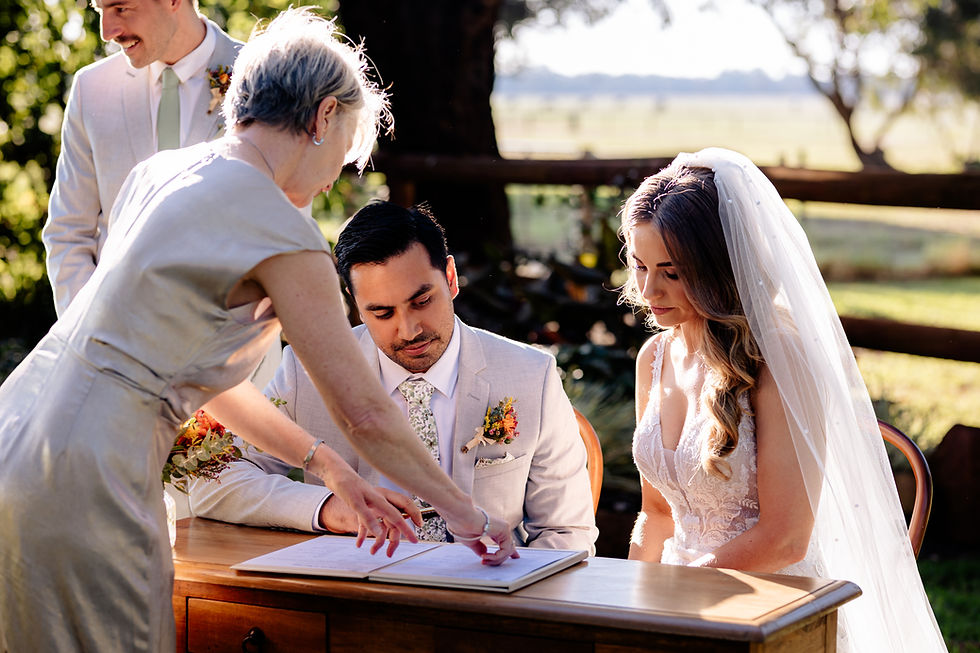
After the ceremony, there are three marriage documents that need to be signed by the two of you, your witnesses and your celebrant.
Witness Requirements
Your two witnesses must be over 18 years of age, able to understand what they are witnessing and able to speak and understand English. They should also not be under the influence of alcohol or other substances.
If you' d like to see how these legal requirements fit into a real ceremony, here's a step-by-step guide to What Happens During a Wedding Ceremony.
After the Ceremony
Marriage Registration
Once your ceremony is complete, your celebrant sends all of your paperwork to Births, Deaths and Marriages. I scan and upload everything directly through their online portal, although some celebrants still post documents.
Obtaining Your Official Marriage Certificate
On the day of your wedding, you'll receive a ceremonial marriage certificate. It's a lovely keepsake, but it can't be used for legal purposes such as changing your name or dealing with immigration matters.
For those purposes, you'll need to apply for an official marriage certificate from Births, Deaths and Marriages after your marriage has been registered.
Registration can take up to four weeks during busy periods, although it's often completed in around two weeks, or even less in the cooler months. I always let my couples know once their marriage has been registered and send them the information they need to apply for their official certificate.
Common Misunderstandings About Marriage Laws
Can We Get Married Next Week?
Usually, no. More information on that can be found here.
Do We Need to Be Australian Citizens?
Not at all. People from all over the world get married in Australia.
If one or both of you don't speak and understand English at a competent level, you'll need a translator. This can be a friend or family member who speaks both English and your language fluently.
Can We Get Married Online?
Definitely not.
Do We Need a Celebrant?
Yes. If you want to be legally married in Australia, you'll need an authorised celebrant or other authorised marriage officer to conduct the ceremony.
Conclusion
The legal requirements for marriage in Australia might sound a little overwhelming at first, but they're actually quite simple once you know what's involved. Most of the paperwork can be completed well before your wedding day, and a good celebrant will guide you through every step of the process.
My advice is simple: book your celebrant early and start the paperwork as soon as you have a wedding date. That way, you can spend less time worrying about forms and deadlines and more time looking forward to getting married.
If you have any questions about the legal side of getting married, feel free to get in touch. I'm always happy to help make the process as easy and stress-free as possible.
Enjoying the blog? Join my newsletter mailing list for occasional wedding planning tips, ceremony ideas and new posts. No spam, and you can unsubscribe at any time.


Comments